

AAA testing finds these vehicle technologies work better at night now than in 2019 but have trouble “seeing” pedestrians in high-visibility clothing
PORTLAND, Ore., – AAA finds that the pedestrian detection systems found on many newer vehicles work better at nighttime than when AAA last tested these technologies in 2019. AAA evaluated vehicles equipped with pedestrian automatic emergency braking (PAEB) systems and finds that these systems avoided crashing into pedestrian targets 60% of the time at night, compared to 0% in 2019.
Here are links to b-roll video, the fact sheet, and full report. Find photos below.
The team also investigated whether outfitting the pedestrian target with an ANSI Class 3 outfit, the type of high-visibility clothing used by roadside assistance providers, affects the performance of the evaluated PAEB systems. The impact of high-visibility clothing on PAEB systems varied under nighttime conditions, ranging from improved avoidance to a complete loss of detection.
“Pedestrian automatic emergency braking systems have significantly improved in how well they detect pedestrians at nighttime. However, our AAA testing shows that these systems can have trouble detecting pedestrians who are wearing high-visibility clothing. The bottom line is these systems don’t work about 40% of the time, so much more work needs to be done,” says Marie Dodds, public affairs director for AAA Oregon/Idaho. “Most pedestrian fatalities occur at night, and our testing shows that more improvement is necessary in order to save more lives, including those of our AAA roadside assistance providers.”
In partnership with the Automobile Club of Southern California’s Automotive Research Center, AAA evaluated four vehicles with PAEB. These vehicles are the newer versions of vehicles AAA tested in 2019: 2024 Honda Accord, 2025 Toyota Camry, 2025 Chevrolet Malibu, and 2025 Tesla Model 3.
Testing was conducted on a closed course using a robotic pedestrian adult crossing in front of the test vehicles traveling at 25 mph. Tests were conducted during the day and night with the adult pedestrian dressed in both standard, non-reflective clothing and ANSI Class 3 high-visibility apparel.
Key Findings:
- Overall, nighttime PAEB impact avoidance improved from 0% in 2019 to 60% in 2025.
- The ANSI Class 3 high-visibility clothing had:
- no negative effect on PAEB performance during the daytime, avoiding a collision 95% of the time.
- varied PAEB responses at nighttime, ranging from improved avoidance to complete loss of detection.
Here’s a short video comparing the AAA testing in 2019 to 2025:

Detection and response inconsistency pose ongoing risks to pedestrian safety, given that over 75 percent of pedestrian fatalities occur after dark. Recent findings from the AAA Foundation for Traffic Safety revealed pedestrian fatalities in the U.S. rose by over 80% in the past 15 years, with this increase occurring on urban arterial roads and after dark.
According to the National Highway Traffic Safety Administration (NHTSA), in 2023, an estimated 7,314 pedestrians were killed, and more than 68,000 pedestrians were injured nationwide. In Oregon the same year, 108 pedestrians were killed and 675 were injured, according to the Oregon Department of Transportation : Crash Data Viewer : Data & Maps : State of Oregon
These pedestrian fatalities include AAA roadside assistance providers. The AAA Foundation for Traffic Safety analysis of data from the Emergency Responder Safety Institute found an average of 23 roadside assistance providers a year nationwide, including tow providers, were struck and killed by vehicles while working at the roadside in the years 2020-2024.
AAA’s advice for drivers:
- Pedestrian Automatic Emergency Braking (PAEB) systems are never a substitute for an engaged driver. Do not rely on pedestrian detection systems to prevent a crash.
- Drive with extra caution at night, as this is the riskiest time for pedestrians.
- Stay alert and please don’t engage in risky driving behaviors. Speeding, texting, driving while drowsy or distracted, or driving under the influence of cannabis, alcohol, and some prescription or over-the-counter meds can significantly increase the risk of a collision. Follow speed limits, keep your smartphone out of reach, and only drive when sober.
- Read the owner’s manual to understand what safety systems the vehicle is equipped with and how they operate.
“While Pedestrian Automatic Emergency Braking systems have improved in the last several years, no technology works 100% of the time. It’s up to you to be an alert and engaged driver whenever you’re behind the wheel,” adds Dodds.
Drivers are responsible for yielding to pedestrians, but those traveling on foot should also be vigilant. Pedestrians should stay on sidewalks or on the side of the road, and use crosswalks whenever possible. Comply with traffic signals, look both ways before crossing the street, and refrain from texting while walking and engaging with your phone. Be extra careful at nighttime, even while wearing high-visibility clothing.
Manufacturers should enhance the reliability of PAEB systems during nighttime conditions. Evaluations should also consider the system’s effectiveness when pedestrians wear different types of apparel, particularly high-visibility clothing.
AAA encourages regulators and standards organizations to improve pedestrian safety protocols by including more nighttime scenarios involving high-visibility apparel. Expanding evaluation practices will provide a better assessment of PAEB performance and help reduce pedestrian injuries and fatalities.
To protect roadside assistance providers, drivers with disabled vehicles, and others on the roadside, AAA offers these tips:
- Remain alert, avoid distractions and focus on the task of driving.
- Keep an eye out for situations where emergency vehicles, tow trucks, utility service vehicles or disabled vehicles are stopped on the side of the road.
- Follow Slow Down Move Over Laws. When you see disabled vehicles, emergency vehicles and/or roadside assistance providers, slow down and, if possible, move one lane over and away from the people and vehicles stopped at the side of the road. Oregon’s Move Over Law (ORS 811.147) requires drivers to move over to another lane or slow down by at least five miles per hour below the posted speed limit when passing a stopped emergency vehicle, tow truck, or roadside assistance vehicle with its warning lights on. https://www.oregon.gov/odot/safety/pages/enforcement.aspx



Methodology
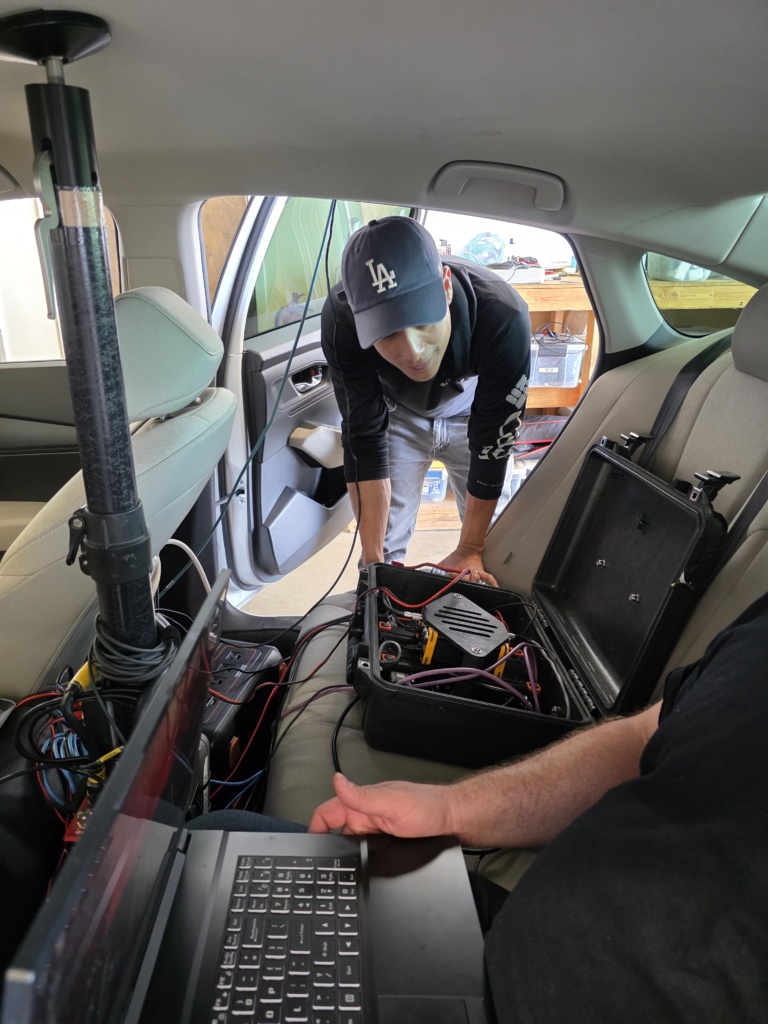
In partnership with the Automobile Club of Southern California’s Automotive Research Center, closed-course testing was conducted on roadways specifically designed for standardized ADAS testing on the grounds of Minter Field Airport in Shafter, California. All test scenarios were conducted on a vehicle dynamics pad comprised of straight, flat, dry asphalt free of visible moisture, potholes, or irregularities that could affect the trajectory of the test vehicles or target.
Four test vehicles were selected: the 2024 Honda Accord, the 2025 Toyota Camry, the 2025 Chevrolet Malibu, and the 2025 Tesla Model 3. Each vehicle was evaluated under controlled day and night conditions, traveling at a constant speed of 40 km/h (25 mph) toward a perpendicular crossing pedestrian. Tests compared results from 2019 with standard and ANSI Class 3 high-visibility clothing, recording system warnings, braking responses, and outcomes. Complete methodology can be found in the full research report here.
About AAA
Started in 1902 by automotive enthusiasts who wanted to chart a path for better roads in America and advocate for safe mobility, AAA has transformed into one of North America’s largest membership organizations. Today, AAA delivers exceptional roadside assistance, helps travelers plan their dream vacations and adventures, offers exclusive member discounts and benefits, and provides trusted financial and insurance services – all to enhance the life journey of our 65+ million members across North America, including over 58 million in the United States. To learn more about all AAA offers or become a member, visit AAA.com.
AAA news releases, high resolution images, broadcast-quality video, fact sheets and podcasts are available on the AAA NewsRoom at NewsRoom.AAA.com.
Find local news releases at https://oregon.aaa.com/community/media/media-contacts.html
For more info go www.AAA.com. AAA Oregon/Idaho provides more than 917,000 members with travel, insurance, financial and automotive-related services, and is an affiliate of AAA National, serving more than 65 million members in North America.