

One of the scariest things to experience as a driver is seeing steam billowing out from under your hood like it’s a boiling teapot. Fortunately, your car overheating doesn’t mean it’s time to start researching new cars , in most cases, a quick repair from your favorite auto repair shop will get you back on the road.
We’ve been helping people when their car overheats for 100 years, and we’ve gathered everything you need to know about possible causes, what to do and how to prevent it from happening again so you can drive with confidence. If your car is overheating, there’s something wrong with your car’s cooling system. Here are a few common culprits.
1. Coolant Issue
One coolant issue may be an improper mixture of coolant and antifreeze. You can purchase coolant from an auto parts store as a premixed or concentrated formula. It won’t function properly if you don’t dilute the concentrated formula exactly as directed.
But in most cases involving coolant, the issue is low coolant. The coolant system is closed, so if you have low coolant, you have a leak somewhere in the system.
2. Thermostat Failure
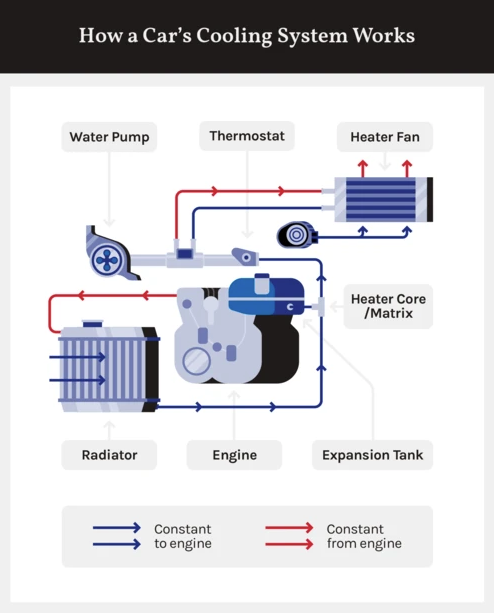
The thermostat can fail to open and not allow coolant into the engine. In other cases, the spring controlling the plug breaks or gets stuck, allowing either too little coolant to cool the engine or too much coolant to enter the engine too quickly. Both failures will result in a car overheating.
3. Damaged Radiator
Several parts of the radiator can malfunction, causing a car to overheat:
- A cracked cap
- A leaky hose
- A broken fan
- A rusty radiator
It’s important to change your coolant as outlined in your owner’s manual to prevent these issues from occurring.
4. Faulty Serpentine Belt
5. Malfunctioning Water Pump
6. Clogged or Leaking Coolant Hose
7. Blown Head Gasket
8. Low Oil Level
To prevent this, get regular oil changes.

7 Signs Your Car Is Overheating
1. Illuminated Temperature Gauge
If everything functions normally, this should be the first indication that your car is overheating. However, this warning sign only works if your car’s thermostat is working, so don’t rely on it. If you see other signs of overheating but your temperature gauge is not indicating an issue, you should still pull over and turn the engine off.
2. Burning Smell
If your heat or air conditioning is on, they will pull the scents directly into the car through the HVAC intake located near the engine. If you notice this smell, open the windows immediately to disperse any potentially harmful fumes.
3. Thumping or Ticking Sounds From the Engine
4. Coolant Under Your Car
5. Steam From Underneath the Hood
6. Decreased Engine Power
7. Extremely Hot Hood
What To Do If Your Car Overheats
- Pull over safely. Turn on your hazard lights as you slow down and make your way to the shoulder or a less busy side street or parking lot.
- Turn off your engine. As soon as you are pulled over, turn off the car to prevent further damage.
- Move to a safe location. Exit the vehicle with any passengers and move to a safe location away from the roadway. This will limit your chances of getting hit by a passing car.
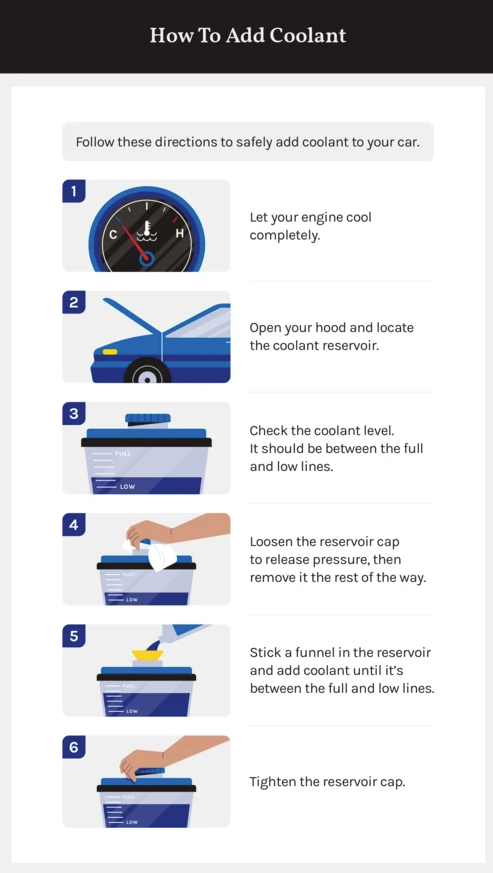
- Call roadside assistance. To prevent further damage to your car, call roadside assistance for a tow to the nearest auto repair facility. Attempting to add coolant to your vehicle yourself and continuing to drive is dangerous and can cause severe burns and potentially thousands of dollars of damage to your vehicle.
How To Prevent an Overheated Engine
- Check fluid levels regularly. Regularly check fluid levels to ensure they are always within normal levels. Most auto repair facilities check your fluid levels as part of a standard oil change, but you should also check once a month between oil changes.
- Monitor your car’s temperature in hot weather. Excessively high temperatures can add to the heat produced by your engine. During hot weather, keep an eye on your car’s temperature gauge when driving and consider turning off the AC to reduce stress on your engine.
- Get regularly scheduled maintenance as outlined in your owner’s manual. Adhering to the manufacturer’s maintenance schedule can catch minor issues before they become problems that cause your engine to overheat.
- Drive patiently in stop-and-go traffic. Stop-and-go traffic puts more stress on the engine than driving on the highway since the engine idles more. Avoid accelerating quickly and slamming on the brakes as much as possible whenever you drive, especially on hot days.