

Photo Courtesy: Visit Idaho; Earl M. Hardy Box Canyon Springs Nature Preserve
Cascading Wonders
Travel Along These Scenic Byways in Oregon and Idaho For The Ultimate Waterfall Experience
In the Pacific Northwest, life can be defined by the relentless, rhythmic movement of water—whether it is rain, rivers or waves on the ocean. Every year, travelers are drawn to mist-filled coasts and water-chiseled canyons to witness the raw, geological wonders of this scenic region. Carved out by ancient volcanic eruptions and glacial floods, Oregon and Idaho hold some of the most spectacular natural phenomena in North America: waterfalls.
Embark on a slow drive down either of these two scenic highways that showcase a number of cascading falls. There are few places in the world where you can see so many of them in such a short distance. Any one of these waterfalls could be the main attraction, but put together, they add up to a stunning getaway whichever route you choose. Whether you’re standing in the mist of Multnomah Falls or the spray of Perrine Coulee Falls, the routes offer a chance to slow down, unplug from the noise of the world and connect with the untamed spirit of the Pacific Northwest.
Photo Courtesy: Horsetail Falls; Daniel Forster
Oregon’s Waterfall Corridor
Historic Columbia River Highway
Approaching from the west, as those traveling from Portland often do, the journey along what is referred to as the Waterfall Corridor begins with a step back into history. Built more than a century ago, the Historic Columbia River Highway was planned as the first scenic roadway in the United States. This narrow ribbon of pavement was engineered specifically to showcase the Gorge’s vertical splendor, and stands today much as it did in the early 1900s.
Geologically, you are driving through the aftermath of the Missoula Floods, which scoured these basalt cliffs into their dramatic heights. Before reaching the falls, stop at the Portland Women’s Forum State Scenic Viewpoint and the iconic Vista House at Crown Point. Perched 733 feet above the river, these spots offer some of the most famous panoramic views of the Gorge.

1. Latourell Falls
The first major waterfall encounter is a stunning 224-foot cascading plunge set against a backdrop of columnar basalt. If you want a quick peek, the falls are just a one-minute walk along a paved path, making this view accessible for everyone. Feeling more adventurous? Try the moderate 2.4-mile loop hike leading to the shorter Upper Latourell Falls before circling back to the highway.
2. Shepperd’s Dell Falls
This falls cascades down 220 feet and is a quick, roadside stop—but note that parking is limited to small pullouts on both sides of the road. It’s easily accessible by parking at the historic arch bridge, then descending a set of stairs for an overhead look at the waterfall.
3. Bridal Veil Falls
This is the only waterfall in the corridor located below the highway, with a moderately easy third-of-a-mile trail leading to a 118-foot plunge. For a few extra steps, take the side trail, which creates a 1.4-mile loop. While in the area, pop into the Bridal Veil Post Office, one of the smallest, and most charming, postal stops in the country. Send a postcard to yourself with the unique “Bridal Veil” local postmark as a memento.
4. Wahkeena Falls
Measuring 258 feet over two drops, the powerful Wahkeena Falls is found about a half-mile up a moderately easy paved trail. Stop at the small stone bridge right next to the falls for a perfect family photo op. For an added challenge, continue on a 4.7-mile loop that connects to Multnomah Falls.
5. Multnomah Falls
Known as the “crown jewel of the Columbia River Gorge” and Oregon’s tallest waterfall at 620 feet, Multnomah Falls is a beauty to behold. The best times to visit for highest water flow are late winter to early spring, with mornings and weekdays being the best option to sidestep the crowds. The path to Benson Bridge is paved and wheelchair accessible. If you’re up for a hike, continue along a steep trail to the top where connecting trails intersect. If chasing the falls has you feeling famished, grab lunch at the historic Multnomah Falls Lodge to fuel up with its Pacific Northwest cuisine.
NOTE: Most visitors access the main lot via I-84, but note that during peak summer months, the U.S. Forest Service requires a timed entry permit.
6. Horsetail Falls
A 216-foot plunge, this is the perfect finale along the Historic Columbia River Highway because it is visible right from the side of the road. For one last look at the Gorge’s wonder, a short half-mile hike leads up to Ponytail Falls, where the trail passes directly behind a curtain of water for a unique viewpoint.
Photo Courtesy: Horsetail Falls; Daniel Forster
Idaho’s Magic Valley
Thousand Springs Scenic Byway
While Oregon’s falls seemingly drop from the sky, Idaho’s often emerge directly from the earth. The Thousand Springs Scenic Byway winds 67 miles along the Snake River. It’s here that the massive Snake River Plain Aquifer, acting like an underground river, bursts through canyon walls to finally flow over cliffs. The water began as snow in the mountains 100 miles away, traveling through porous lava rock for decades before finally greeting the daylight.
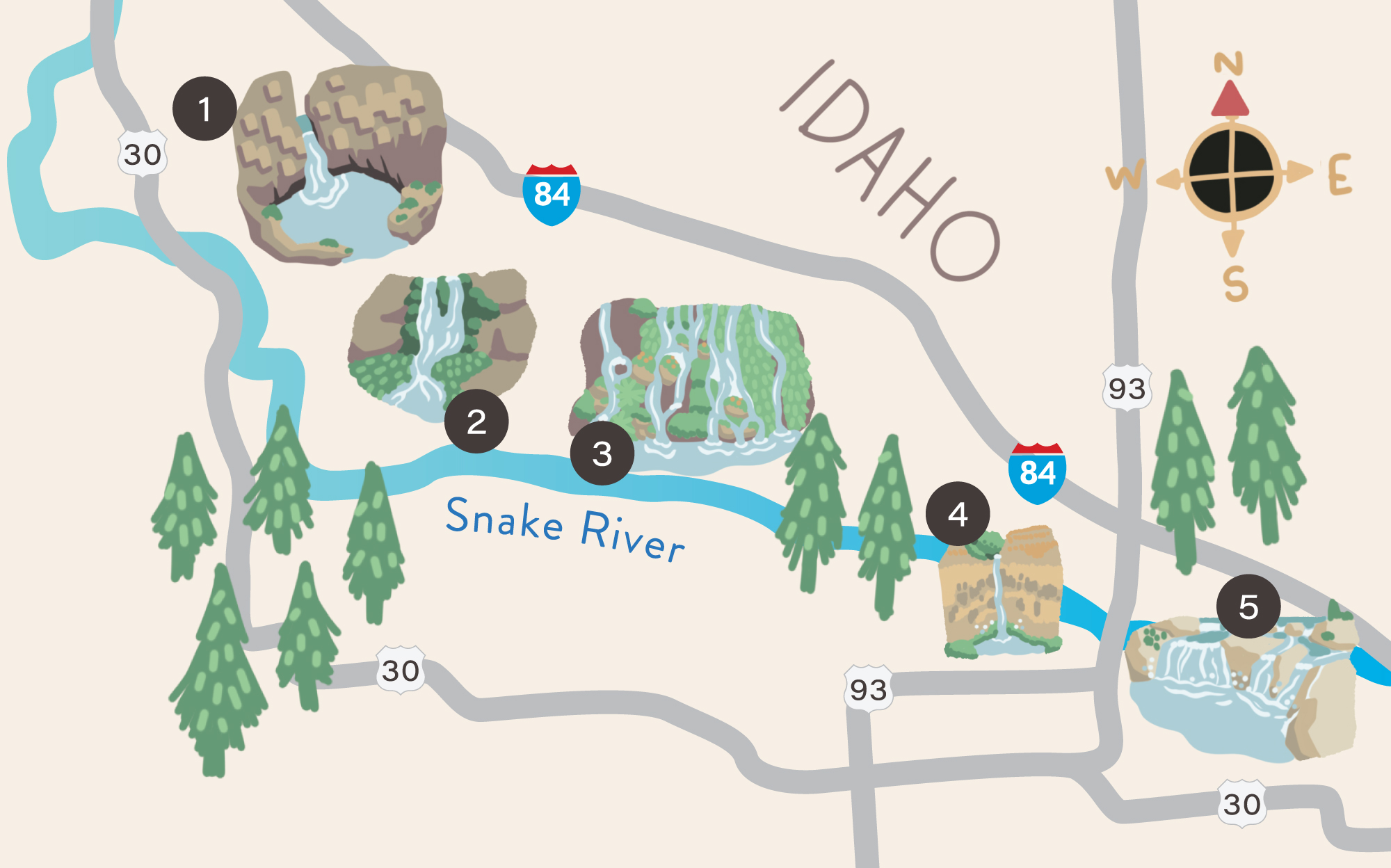
1. Malad Gorge State Park
Begin in Bliss at the Devil’s Washbowl, a 60-foot waterfall where the Malad River crashes into a 250-foot-deep canyon. This is a very easy “park and view” stop for any traveler. If you’re adventurous, there is a footbridge spanning the gorge which offers a heart-pounding view straight down into the churning crystal-clear whitewater.
2. Ritter Island Waterfalls
This is the heart of the Thousand Springs Scenic Byway. At the base of this collection of multiple falls, find springs gushing out of the volcanic rock like a leaky faucet on a larger scale, rushing into the Snake River where visitors can feel the flow on paddle boards, kayaks or just for a quick dip. This lush oasis is open March through October.
3. Niagara Springs
With water emerging from the canyon wall, these springs form a vibrant blue waterfall, emitting 250 cubic feet of water per second. The water stays a constant 58 degrees year-round, creating a diverse microclimate of both wildlife and foliage. Best viewed in the spring, this flow supports a nearby fish hatchery as well as local irrigation.
4. Perrine Coulee Falls
Head toward Twin Falls for this year-round, 200-foot plunge into the Snake River. A short, half-mile hike leads you behind the waterfall’s curtain of water for views of the Perrine Bridge, where you might spot BASE jumpers.
5. Shoshone Falls
Known as the “Niagara of the West,” Shoshone Falls stands at 212 feet and is actually 45 feet taller than its New York cousin. During the spring runoff, its roar is deafening and the mist creates what seem like permanent rainbows across the wide rim. It’s a magical sight to see.


AAA Member Benefits






Travel Deals


