

Photo courtesy of of Lindblad Expeditions
The New Age of Exploration
Expedition cruises combine wildlife encounters, expert-guided exploration and surprising comfort in some of the world’s most extraordinary places
Photo Photos top left to right by istock/guenterguni | istock/LFPuntel | by Alex Pulaski | Middle left to right by istock/Gri-spb | by Alex Pulaski | istock/Uwe-Bergwitz | bottom left to right by Alex Pulaski | istock/kjorgen | istock/Donyanedomam
Explorers Haven’t Had it Easy Over The Years.
Lewis and Clark endured an Oregon winter soaked to the bone, subsisting on dried salmon and wild potatoes. Naturalist Charles Darwin lived on hardtack (dried biscuits) and salted meat, and sampled tortoises, iguanas and armadillos while aboard the HMS Beagle.
Nothing like today. As we sail into unfamiliar waters aboard modern cruise ships, we recount the day’s adventures over pan-seared seabass and a glass of chardonnay. Then hit the hot tub.
Expedition cruises have never been so much fun, or so popular. Smaller, more nimble ships have expanded wildlife viewing and learning opportunities in recent years to places once considered far flung: the Galápagos, Alaska, Antarctica and beyond.
“People are really looking for experiences that feel authentic and a little out of the ordinary,” said Jennifer Kinnaman, director of travel services for AAA Oregon/Idaho. “With expedition travel, you can hop into a Zodiac and be right there—up close with wildlife or landing in places most people never get to see. That desire to learn something new while traveling is what’s driving the interest in expedition cruises.”
Photo courtesy of istock/BruceBlock
Immersive Travel
A more adventurous, interactive way to explore the world, expedition travel often brings you to places that feel remote and untouched. These trips focus on nature, wildlife and culture, with expert guides leading excursions and hands-on experiences. It’s a great fit for travelers who want more than just seeing a destination—they want to truly experience it and connect with the places and communities they’re visiting.
The trend is steadily growing. According to the Cruise Lines International Association, expedition cruise bookings increased 71% between 2019 and 2023.
Photo courtesy of Seabourn
An Array of Options
In addition to National Geographic-Lindblad Expeditions, your local AAA travel expert can suggest several expedition options, including Hurtigruten Expeditions, Seabourn, Silversea, Viking, Celebrity, Alexander + Roberts,
HX Expeditions and Tauck’s Antarctica Expedition. Each offers its own take on exploration.
“Some are known for their expertise in Antarctica, some specialize in small-ship experiences and others emphasize ultra-luxury,” said Kinnaman. “It really depends on what kind of journey a traveler is looking for.”
Many such cruises are led by specialists—naturalists, wildlife experts, photographers or environmental guides—who bring the destination to life. You might find yourself spotting the Northern Lights in Scandinavia, exploring the Azores or traveling to places like Polynesia and beyond.
With so many options, Kinnaman encourages working with trained AAA travel agents who have firsthand experience with many of the destinations and travel partners they recommend.
“At AAA, we’re really focused on getting to know our travelers,” she said. “Once we understand what someone is looking for, we can guide them to the expedition experience that’s truly the right fit.”
Photo above courtesy of HX, Photo below courtesy of Seabourn
First-Hand Expedition
I set out this February on a weeklong Ecuadorian expedition with my wife, Mica, which included five nights exploring the Galápagos Islands. We sailed aboard the 48-passenger Islander II, operated by National Geographic-Lindblad Expeditions. Scrolling through the images back home, I am thankful for the ability to document experiences with digital photography. Our images constitute a catalog of new experiences—an indelible map of memories made on our first expedition to the equator, capturing the brilliant reds of male frigate birds, near-neon blues of boobies’ webbed feet, pink flamingos craning their necks for an underwater meal.
Similar to other small-ship expeditions we’ve experienced, the Islander II cruise to the Galápagos excelled in offering choices to suit varying interests.
Every evening before dinner, Expedition Leader Juan Carlos Avila outlined the following day’s island and activities such as nature walks, snorkeling or Zodiac excursions. A glass-bottom boat allowed non-snorkelers to also see marine life.
The onboard crew included a team of naturalists with longtime ties to the islands, made famous by Darwin’s 1835 visit. Because of their extensive knowledge, the naturalists were able to share insights on photography, geology, history, ecology and wildlife.
On a morning walk on North Seymour Island, naturalist Wilson Lopez stopped to scratch the bark of a Palo Santo tree, releasing a fragrant oil. He explained that the tree is vital to the islands’ birds, which use it for nesting and roosting—and they also consume the seeds and fruit.
As we wandered, we learned and saw much more. On land, giant tortoises lumbered along grassy hillsides, and sea lions lovingly nursed their pups. Seabirds built nests and courted mates, preening and calling. “Something is in the air—you feel it?” Lopez asked. “It is love, I think.”
We watched a pair of Galápagos penguins gingerly take to the water. We boated past green sea turtles mating and tracked marine iguanas swimming to shore. Fascinated, we took endless photos of a Galápagos hawk making a meal of an iguana.
Heading below the ocean’s surface, we snorkeled past neon blue parrotfish, a guineafowl puffer and the occasional blacktip reef shark or golden ray.
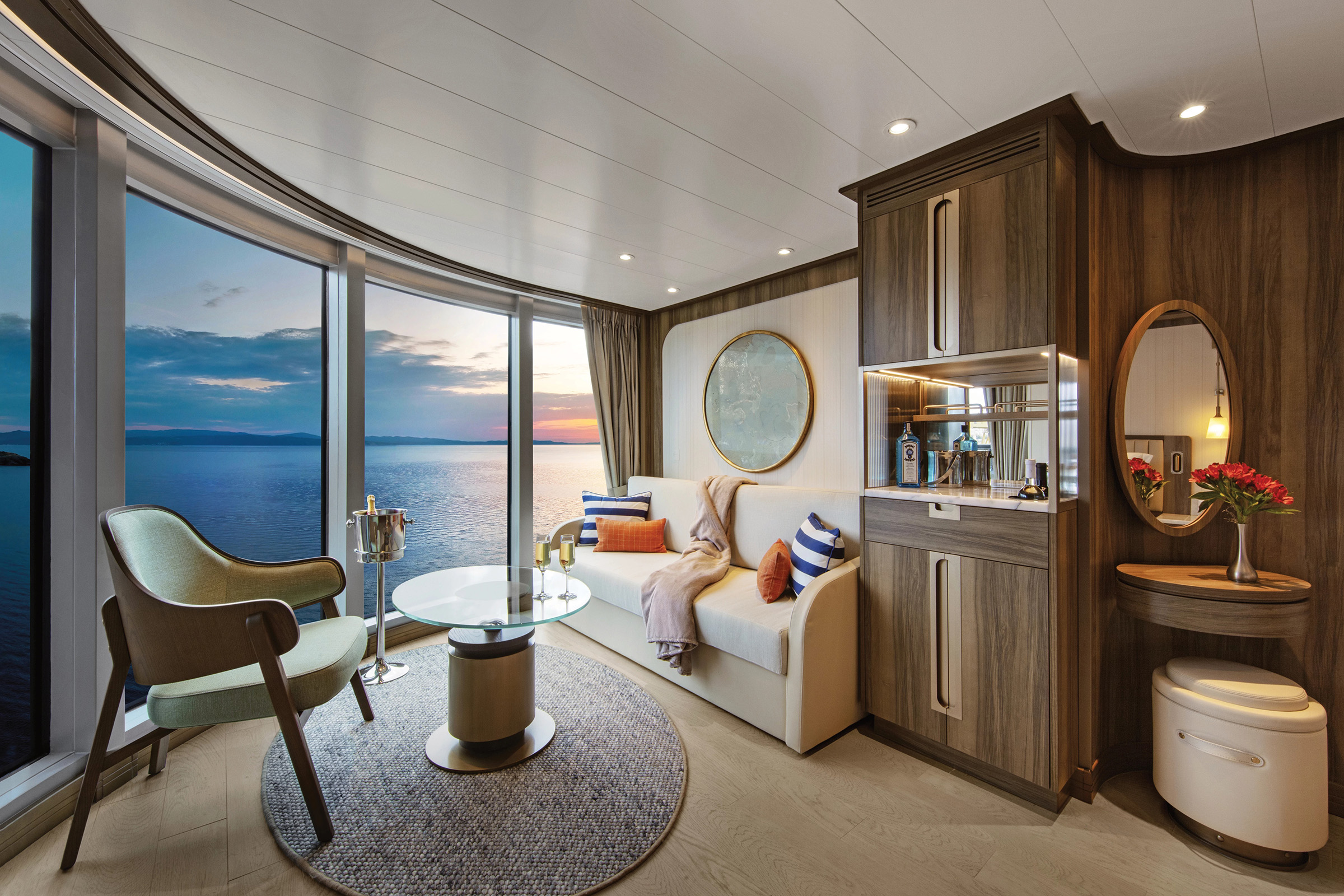
Aboard the well-appointed ship, we supped, forged new friendships, relaxed and learned lessons about iPhone phototaking and Darwin himself. In a compelling presentation about Darwin’s work, naturalist Dennis Ballesteros described the Englishman as inspiring his own love for science and nature.
As Ballesteros neared the presentation’s end, nature itself interrupted.
“Are those dolphins?” a guest asked.
But the guest wasn’t looking at the screen—he was pointing through a window overlooking the ocean. Sure enough, common dolphins by the hundreds were leaping from the water, putting on an indescribable show.
I stepped outside to the railing, momentarily abandoning Darwin. These are the moments that every explorer, even us less intrepid ones, tattoos to memory.

AAA Member Benefits







Travel Deals


